Topic 4: Misc. Questions
You have an Azure AD tenant and an Azure web app named App1.
You need to provide guest users with self-service sign-up for App1. The solution must meet
the following requirements:
• Guest users must be able to sign up by using a one-time password.
• The users must provide their first name, last name, city, and email address during the
sign-up process.
What should you configure in the Azure Active Directory admin center for each
requirement? To answer, select the appropriate options in the answer area.
NOTE: Each correct selection is worth one point.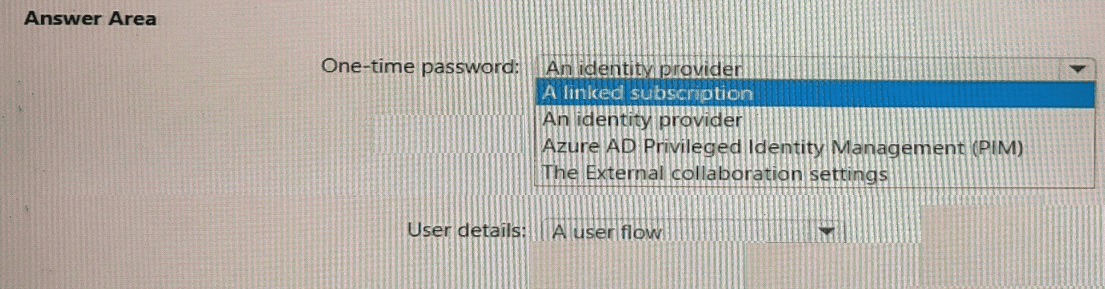
Note: This question is part of a series of questions that present the same scenario. Each
question in the series contains a unique solution that might meet the stated goals. Some
question sets might have more than one correct solution, while others might not have a
correct solution.
After you answer a question in this section, you will NOT be able to return to it. As a result,
these questions will not appear in the review screen.
You have a Microsoft 365 tenant.
You have 100 IT administrators who are organized into 10 departments.
You create the access review shown in the exhibit. (Click theExhibittab.)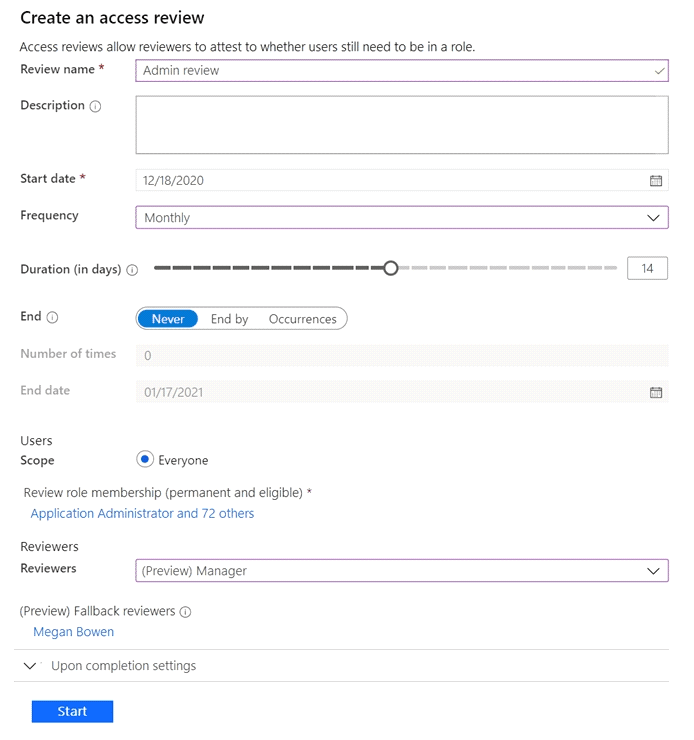
You discover that all access review requests are received by Megan Bowen.
You need to ensure that the manager of each department receives the access reviews of
their respective department.
Solution: You modify the properties of the IT administrator user accounts.
Does this meet the goal?
A. Yes
B. No
You have an Azure subscription that contains two resource groups named RG1 and RG2,
a storage account named storage1.
You assign roles for the subscription as shown in the following table.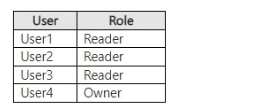
You assign roles for RG1 as shown in the following table.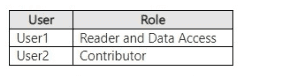
You assign roles for storage1 as shown in the following exhibit.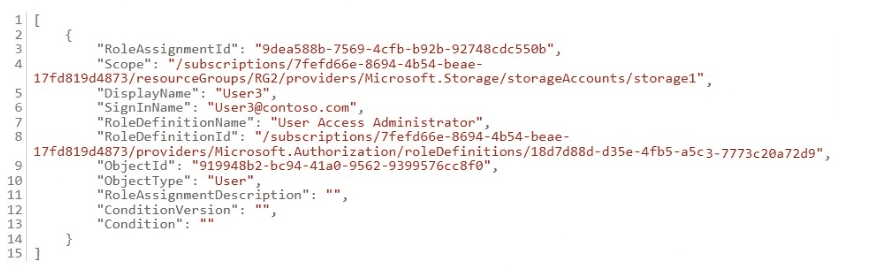
Roles are NOT assigned for other Azure resources.
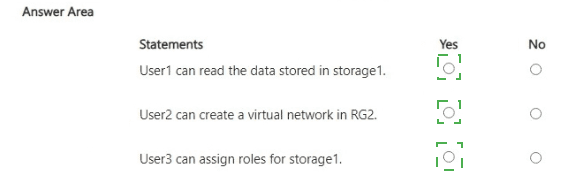
For each of the following statements, select Yes if the statement is true. Otherwise, select
No.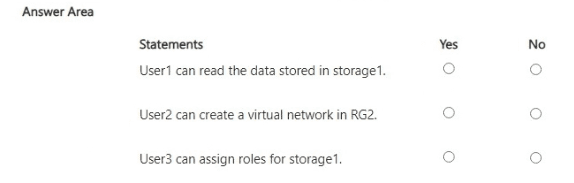
You have an Azure subscription.
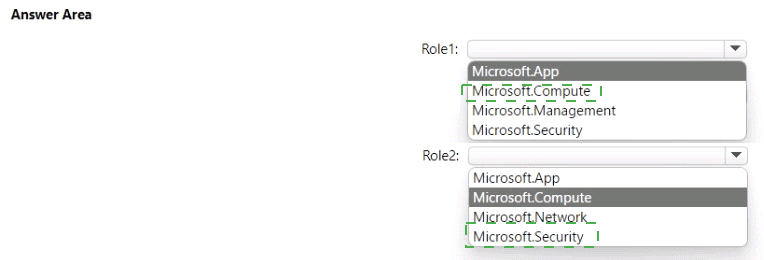
You need to create two custom roles named Role1 and Role2. The solution must meet the
following requirements:
• Users that are assigned Role1 can create or delete instances of Azure Container Apps.
• Users that are assigned Role2 can enforce adaptive network hardening rules.
Which resource provider permissions are required for each role? To answer, select the
appropriate options in the answer area.
NOTE: Each correct selection is worth one point.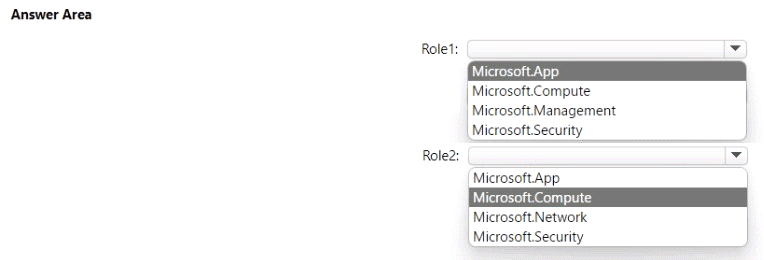
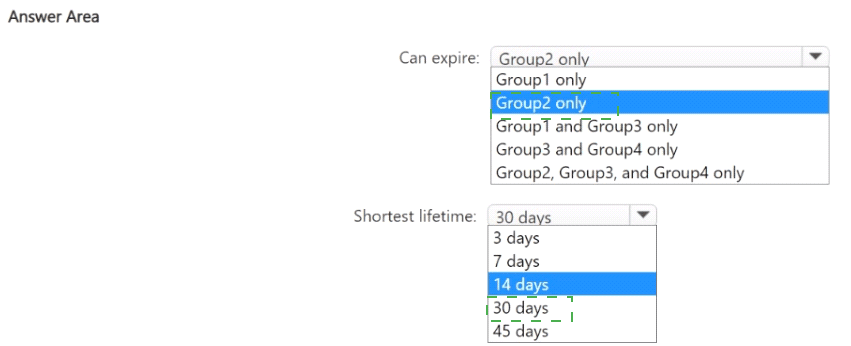
You have a Microsoft 365 E5 subscription that contains the groups shown in the following
table.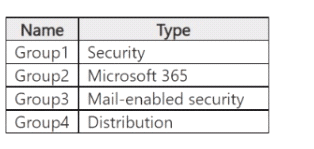
You plan to manage the lifecycles of the groups.
Which groups can be set to expire, and what is the shortest group lifetime you can set? To
answer, select the appropriate options in the answer area.
NOTE: Each correct selection is worth one point.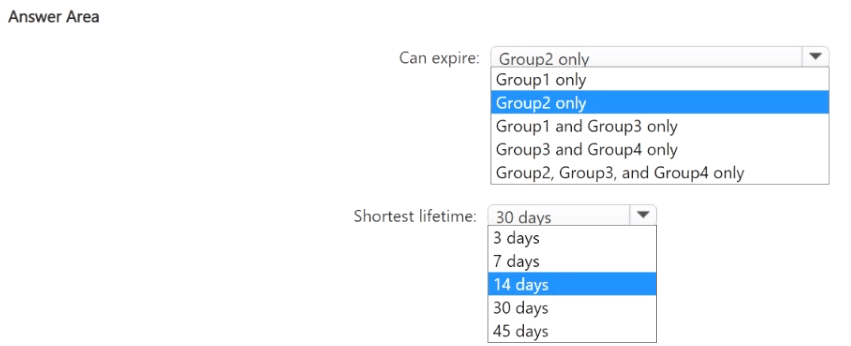
| Page 10 out of 41 Pages |