Topic 3: Mix Questions
A customer has a Microsoft 365 E5 subscription and an Azure subscription.
The customer wants to centrally manage security incidents, analyze log, audit activity, and
search for potential threats across all deployed services.
You need to recommend a solution for the customer. The solution must minimize costs.
What should you include in the recommendation?
A. Microsoft 365 Defender
B. Microsoft Defender for Cloud
C. Microsoft Defender for Cloud Apps
D. Microsoft Sentinel
Your on-premises network contains an e-commerce web app that was developed in Angular and Nodejs. The web app uses a MongoDB database. You plan to migrate the web app to Azure. The solution architecture team proposes the following architecture as an Azure landing zone.

A. Yes
B. No
Explanation:
When using Azure-provided PaaS services (e.g., Azure Storage, Azure
Cosmos DB, or Azure Web App, use the PrivateLink connectivity option to ensure all data
exchanges are over the private IP space and the traffic never leaves the Microsoft network.
https://docs.microsoft.com/en-us/azure/cosmos-db/how-to-configure-private-endpoints
Your company plans to apply the Zero Trust Rapid Modernization Plan (RaMP) to its IT
environment.
You need to recommend the top three modernization areas to prioritize as part of the plan.
Which three areas should you recommend based on RaMP? Each correct answer presents part of the solution.
NOTE: Each correct selection is worth one point.
A. data, compliance, and governance
B. user access and productivity
C. infrastructure and development
D. modern security operations
E. operational technology (OT) and loT
B. user access and productivity
D. modern security operations
You have an Azure subscription that has Microsoft Defender for Cloud enabled. You need to enforce ISO 2700V2013 standards for the subscription. The solution must ensure that noncompliant resources are remediated automatically. What should you use?
A. the regulatory compliance dashboard in Defender for Cloud
B. Azure Policy
C. Azure Blueprints
D. Azure role-based access control (Azure RBAC)
Explanation:
https://azure.microsoft.com/en-us/blog/simplifying-your-environment-setupwhile-
meeting-compliance-needs-with-built-in-azure-blueprints/
You have a customer that has a Microsoft 365 subscription and uses the Free edition of
Azure Active Directory (Azure AD)
The customer plans to obtain an Azure subscription and provision several Azure resources.
You need to evaluate the customer's security environment.
What will necessitate an upgrade from the Azure AD Free edition to the Premium edition?
A. role-based authorization
B. Azure AD Privileged Identity Management (PIM)
C. resource-based authorization
D. Azure AD Multi-Factor Authentication
Explanation:
(https://docs.microsoft.com/en-us/azure/active-directory/privileged-identitymanagement/pim-configure)
https://www.microsoft.com/en-us/security/business/identity-access/azure-active-directorypricing?
rtc=1
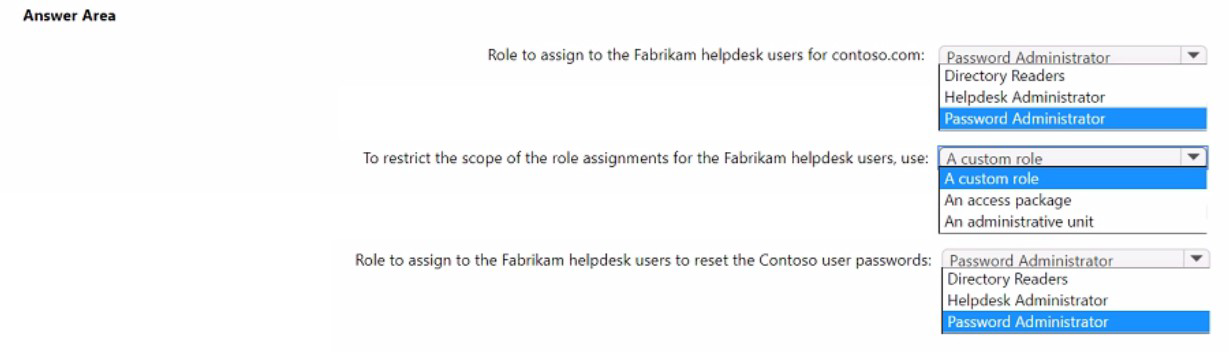
Your company has a Microsoft 365 E5 subscription, an Azure subscription, on-premises
applications, and Active Directory Domain Services (AD DS).
You need to recommend an identity security strategy that meets the following
requirements:
• Ensures that customers can use their Facebook credentials to authenticate to an Azure
App Service website
• Ensures that partner companies can access Microsoft SharePoint Online sites for the
project to which they are assigned
The solution must minimize the need to deploy additional infrastructure components. What
should you include in the recommendation? To answer, select the appropriate options in
the answer area.
NOTE: Each correct selection is worth one point.
Your company is moving a big data solution to Azure.
The company plans to use the following storage workloads:
• Azure Storage blob containers
• Azure Data Lake Storage Gen2
• Azure Storage file shares
• Azure Disk Storage
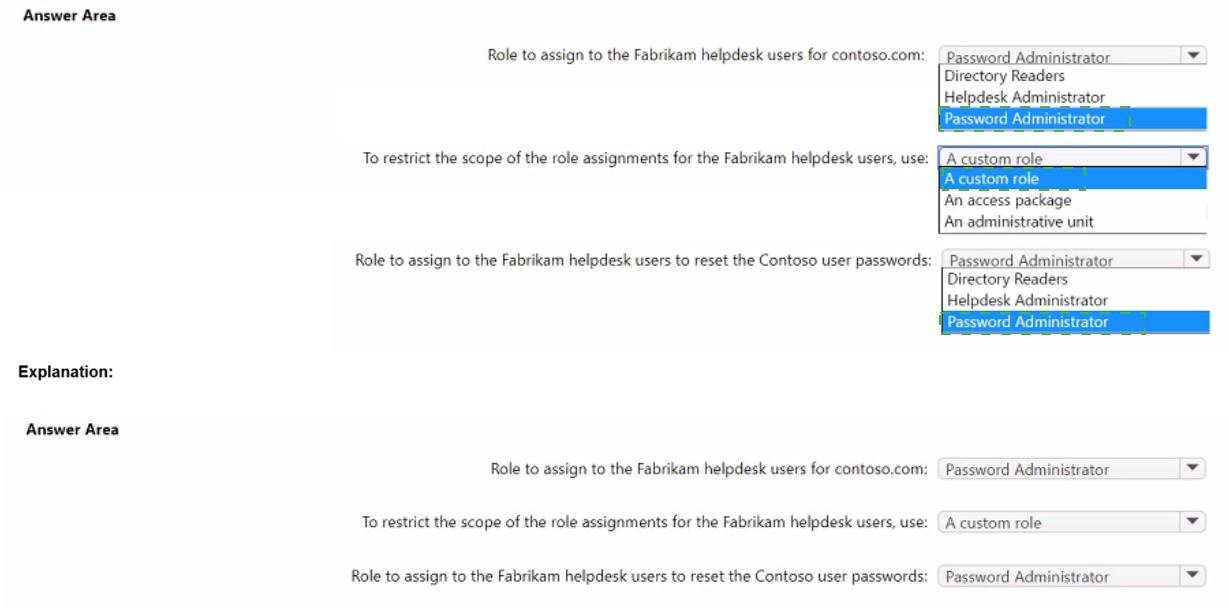
Which two storage workloads support authentication by using Azure Active Directory
(Azure AD)?
Each correct answer presents a complete solution. NOTE: Each correct selection is worth
one point.
A. Azure Disk Storage
B. Azure Storage blob containers
C. Azure Storage file shares
D. Azure Data Lake Storage Gen2
Explanation:
https://docs.microsoft.com/en-us/azure/storage/blobs/authorize-accessazure-
active-directory
https://docs.microsoft.com/en-us/azure/databricks/data/data-sources/azure/adlsgen2/
azure-datalake-gen2-sp-access
Your company has an on-premise network in Seattle and an Azure subscription. The onpremises
network contains a Remote Desktop server.
The company contracts a third-party development firm from France to develop and deploy
resources to the virtual machines hosted in the Azure subscription.
Currently, the firm establishes an RDP connection to the Remote Desktop server. From the
Remote Desktop connection, the firm can access the virtual machines hosted in Azure by
using custom administrative tools installed on the Remote Desktop server. All the traffic to
the Remote Desktop server is captured by a firewall, and the firewall only allows specific
connections from France to the server.
You need to recommend a modern security solution based on the Zero Trust model. The
solution must minimize latency tor developers.
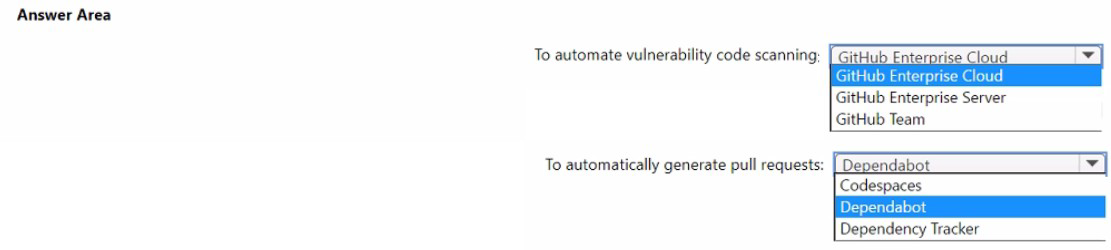
Which three actions should you recommend? Each correct answer presents part of the
solution.
NOTE: Each correct selection is worth one point.
A. Configure network security groups (NSGs) to allow access from only specific logical groupings of IP address ranges.
B. Implement Azure Firewall to restrict host pool outbound access.
C. Configure Azure Active Directory (Azure AD) Conditional Access with multi-factor authentication (MFA) and named locations.
D. Migrate from the Remote Desktop server to Azure Virtual Desktop.
E. Deploy a Remote Desktop server to an Azure region located in France.
C. Configure Azure Active Directory (Azure AD) Conditional Access with multi-factor authentication (MFA) and named locations.
D. Migrate from the Remote Desktop server to Azure Virtual Desktop.
Explanation:
https://docs.microsoft.com/en-us/azure/firewall/protect-azure-virtual-desktop
You have an Azure AD tenant that syncs with an Active Directory Domain Services {AD DS) domain. Client computers run Windows and are hybrid-joined to Azure AD.
You are designing a strategy to protect endpoints against ransomware. The strategy
follows Microsoft Security Best Practices.
You plan to remove all the domain accounts from the Administrators group on the Windows
computers.
You need to recommend a solution that will provide users with administrative access to the
Windows computers only when access is required. The solution must minimize the lateral
movement of ransomware attacks if an administrator account on a computer is
compromised.
What should you include in the recommendation?
A. Local Administrator Password Solution (LAPS)
B. Privileged Access Workstations (PAWs)
C. Azure AD Privileged Identity Management (PIM)
D. Azure AD identity Protection
You have an operational model based on the Microsoft Cloud Adoption framework for Azure. You need to recommend a solution that focuses on cloud-centric control areas to protect resources such as endpoints, database, files, and storage accounts. What should you include in the recommendation?
A. security baselines in the Microsoft Cloud Security Benchmark
B. modern access control
C. business resilience
D. network isolation
| Page 4 out of 18 Pages |
| SC-100 Practice Test | Previous |