Topic 2: Misc. Questions

You have an on-premises SAP environment hosted on VMware VSphere that uses Microsoft SQL Server as the database platform.

You plan to migrate the environment to Azure. The database platform will remain the same.

You need gather information to size the target Azure environment for the migration. What should you use?

A.

the SAP EarlyWatch report

B.

Azure Advisor

C.

the SAP HANA sizing report

D.

Azure Monitor

B.   

Azure Advisor


Explanation:
https://azure.microsoft.com/nl-nl/blog/sap-on-azure-architecture-designing-forperformance-and-scalability/
"For existing on-premises systems, you should reference system configuration and resource utilization data. The system utilization information is collected by the SAP OS Collecto.

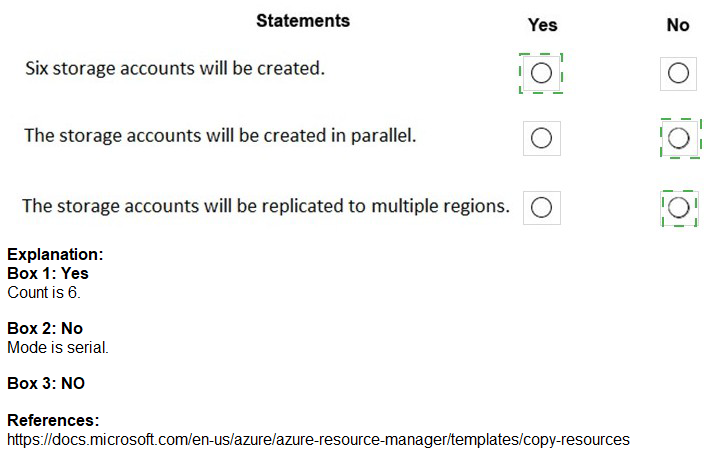
You have the following Azure Resource Manager template.


You have an Azure subscription that contains an SAP HANA on Azure (Large Instances) deployment. The deployment is forecasted to require an additional 256 GB of storage. What is the minimum amount of additional storage you can allocate?

A.

256 GB

B.

512 GB

C.

1TB

D.

2TB

A.   

256 GB


You plan to automate a deployment of SAP NetWeave on Azure virtual machines by using Azure Resource Manager templates. The database tier will consist of two instances of an Azure Marketplace Microsoft SQL Server 2017 virtual machine image that each has 8 TB of RAM.

Which task should you include in the templates used to deploy the SQL Server virtual machines?

A.

Enable buffer pool extensions in SQL Server.

B.

Enable read caching on the disks used to store the SQL Server database log files.

C.

Run the SQL Server setup and specify the /ACTION=REBUILDDATABASE and
/SQLCOLLATION switches.

D.

Run the SQL Server setup and specify the /ACTION-INSTALL and /SQLMAXMEMORY switches.

D.   

Run the SQL Server setup and specify the /ACTION-INSTALL and /SQLMAXMEMORY switches.


You have an on-premises SAP NetWeaver development landscape that contains the resources shown in the following table.

You have a 500-Mbps ExpressRoute circuit between the on-premises environment and a virtual network.


You plan to migrate the landscape to Azure. What should you include in the solution?

A.

Azure Site Recovery

B.

Microsoft System Center 2019 - Data Protection Manager (DPM 2019)

C.

Azure Data Box

D.

Azure Backup Server

A.   

Azure Site Recovery


Explanation:

Simplify cloud migration by using Site Recovery to migrate your SAP deployment to Azure.

Reference:

https://docs.microsoft.com/en-us/azure/site-recovery/site-recovery-sap

You plan to deploy SAP on Azure.

The deployment must meet the following requirements:

•    Support failover to another Azure region in the event of a regional outage.
•    Minimize data loss during a failover.
•    Minimize costs.

Which fault tolerance technology should you choose for the SAP Web Dispatcher and the Microsoft SQL Server 2017 servers to meet the requirements? To answer, drag the appropriate technologies to The correct targets. Each technology may be used once, more than once, or not at all. You may need to drag the split bar between panes or scroll to view content.

NOTE: Each correct selection is worth one point.


Note: This question is part of a series of questions that present the same scenario. Each question in the series contains a unique solution that might meet the stated goals. Some question sets might have more than one correct solution, while others might not have a correct solution.

After you answer a question in this section, you will NOT be able to return to it. As a result, these questions will not appear in the review screen.

You have a complex SAP environment that has both ABAP- and Java-based systems. The current on-premises landscapes are based on SAP NetWeaver 7.0 (Unicode and Non- Unicode) running on Windows Server and Microsoft SQL Server.

You need to migrate the SAP environment to a HANA-certified Azure environment.

Solution: You upgrade to SAP NetWeaver 7.4, and then you migrate SAP to Azure by using Azure Site Recovery.

Does this meet the goal?

A.

Yes

B.

No

A.   

Yes


Explanation:

We need upgrade to SAP NetWeaver 7.4 before the migration. Then Azure Site Recovery is used for the migration to Azure.

Reference:

https://docs.microsoft.com/en-us/azure/site-recovery/vmware-azure-architecture

You have an on-premises SAP production landscape.

You plan to migrate to SAP on Azure.

You need to generate an SAP Early Watch Alert report.

What should you use?

A.

Azure Advisor

B.

SAP HANA Cockpit

C.

SAP Software Provisioning Manager

D.

SAP Solution Manager

D.   

SAP Solution Manager


Note: This question is part of a series of questions that present the same scenario. Each question in the series contains a unique solution that might meet the stated goals. Some question sets might have more than one correct solution, while others might not have a correct solution.

After you answer a question in this section, you will NOT be able to return to it. As a result, these questions will not appear in the review screen. You have a complex SAP environment that has both ABAP- and Java-based systems. The current on-premises landscapes are based on SAP NetWeaver 7.0 (Unicode and Non- Unicode) running on Windows Server and Microsoft SQL Server.

You need to migrate the SAP environment to a HANA-certified Azure environment. Solution: You migrate SAP to Azure by using Azure Site Recovery, and then you upgrade to SAP NetWeaver 7.4.
Does this meet the goal?

A.

Yes

B.

No

B.   

No


Explanation:
We need upgrade to SAP NetWeaver 7.4 before the migration. Reference:

https://docs.microsoft.com/en-us/azure/site-recovery/vmware-azure-architecture

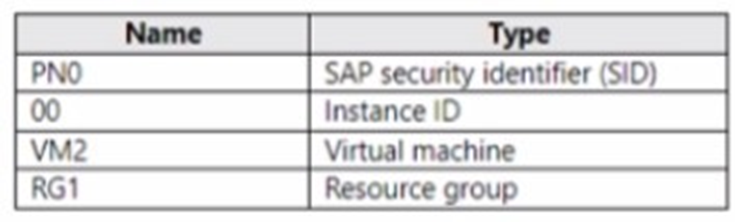
You have an SAP production landscape on Azure that contains the resources shown in the following table.

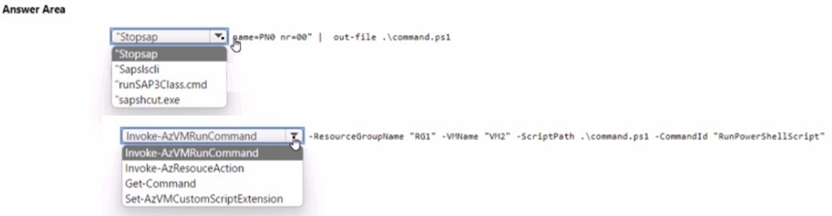
You need to stop the SAP services so that you can perform monthly maintenance.

Which command should you run from the Azure Cloud Shell? To answer, select the appropriate options in the answer area

NOTE: Each correct selection is worth one point.
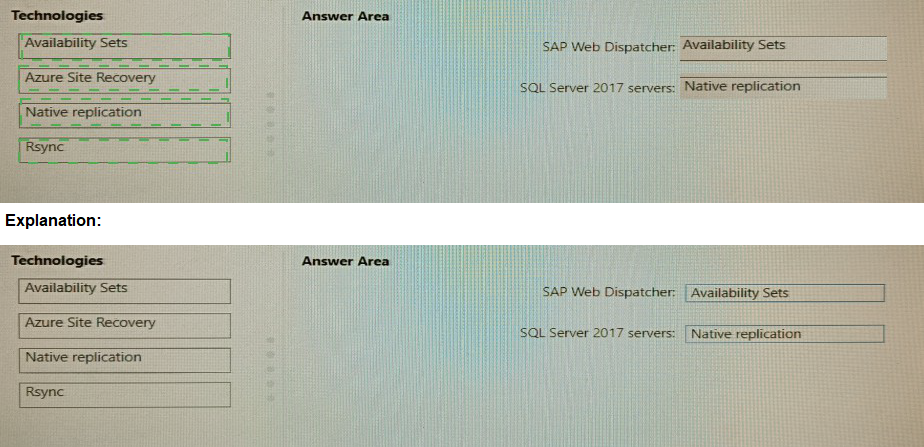

Answer:
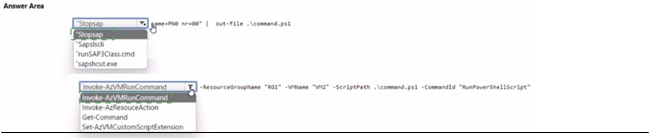
Explanation:

 

Page 7 out of 22 Pages