Topic 2: Misc. Questions
You have an existing SAP production landscape on Azure. The SAP application virtual machines have static IP addresses.
You need to replicate the virtual machines to another Azure region by using Azure Site Recovery. The source and target subnets have different address ranges.
Which three actions should you perform? Each correct answer presents part of the solution.
NOTE: Each correct selection is worth one point.
A.
Stop the virtual
B.
Create a backup
C.
Create a recovery
D.
Modify the networking
E.
Replicate the virtual
Stop the virtual
C.
Create a recovery
E.
Replicate the virtual
You have an on-premises SAP landscape and an Azure subscription that contains a virtual network named VNET1. VNET1 has the following settings.
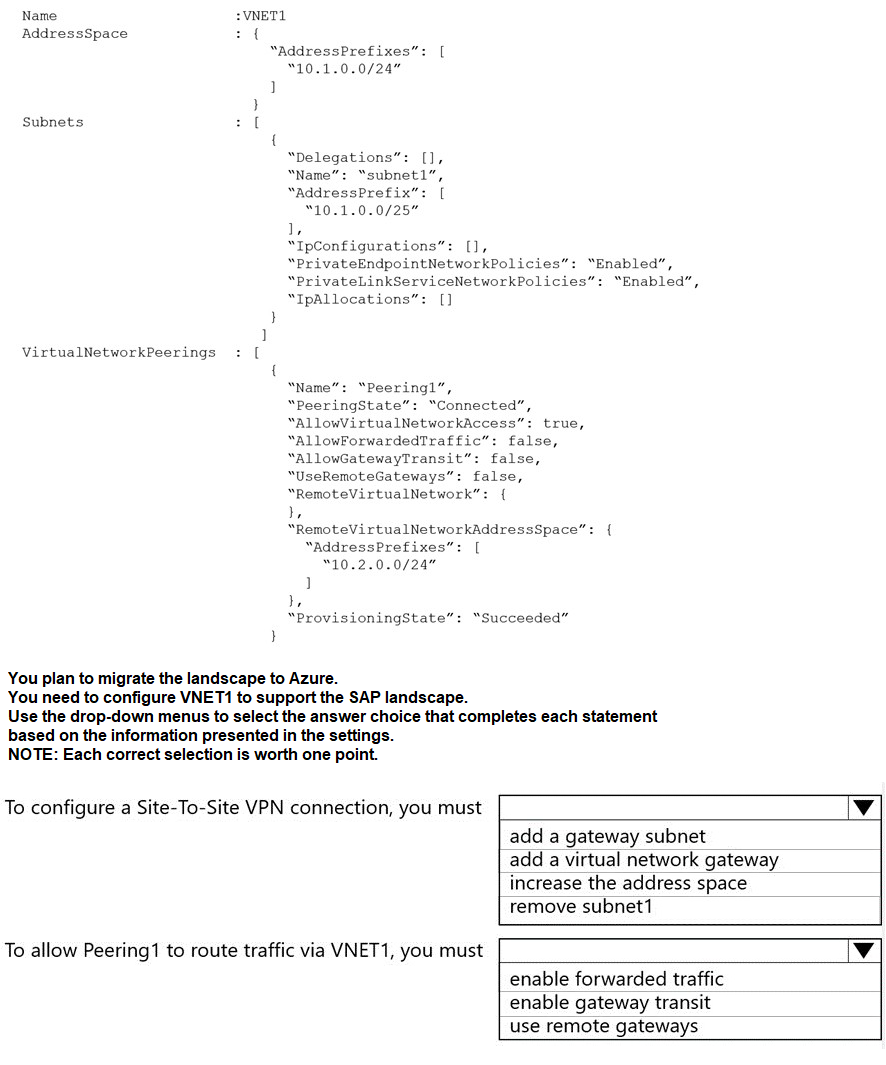
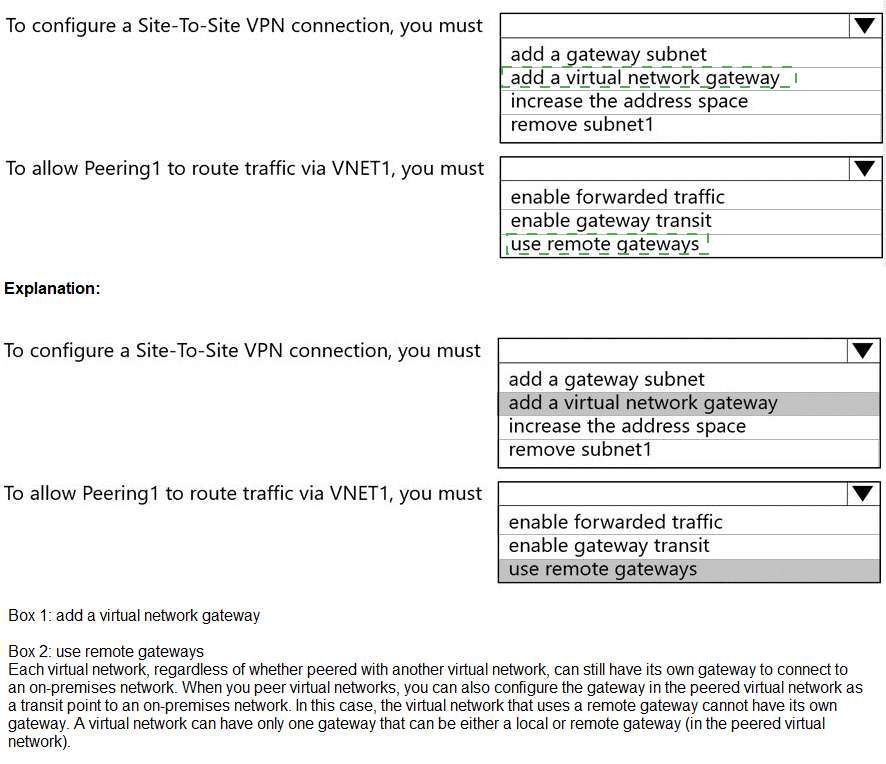
You have an SAP production landscape in Azure that is hosted on virtual machines that run Windows Server and Red Hat Enterprise Linux.
You need to monitor the virtual machines. The solution must ensure that you can collect logs from the virtual machines by using data collection rules (DCRs).
What should you install on each virtual machine?
A.
the Log Analytics agent
B.
the Guest Configuration extension
C.
the Azure Monitor agent
D.
the Azure Diagnostics extension
the Azure Monitor agent
You have an on- premises SAP environment hosted on VMware VSphere that in Microsoft SQL Server as the database platform. You plan to migrate the environment to Azure. The database platform will remain the same. You need gather information to size the target Azure Environment for the migration. What should you use?
A.
Azure Monitor
B.
the SAP NANA sizing report
C.
the SAP EarlyWatch Alert report
D.
Azure Advisor
Azure Advisor
Explanation: https://azure.microsoft.com/nl-nl/blog/sap-on-azure-architecture-designing- for-performance-and-scalability/
"For existing on-premises systems, you should reference system configuration and resource utilization data. The system utilization information is collected by the SAP OS Collector and can be reported via SAP transaction OS07N as well as the EarlyWatch Alert.
You have an SAP production landscape on-premises and an SAP development landscape on Azure.
You deploy a network virtual appliance to act as a firewall between the Azure subnet and the on-premises network.
Solution: You deploy an Azure Standard Load balancer. Does this meet the goal?
A.
Yes
B.
No
No
You have an SAP on Azure production landscape that contains an SAP HANA database. You create a backup policy as shown in the following exhibit.

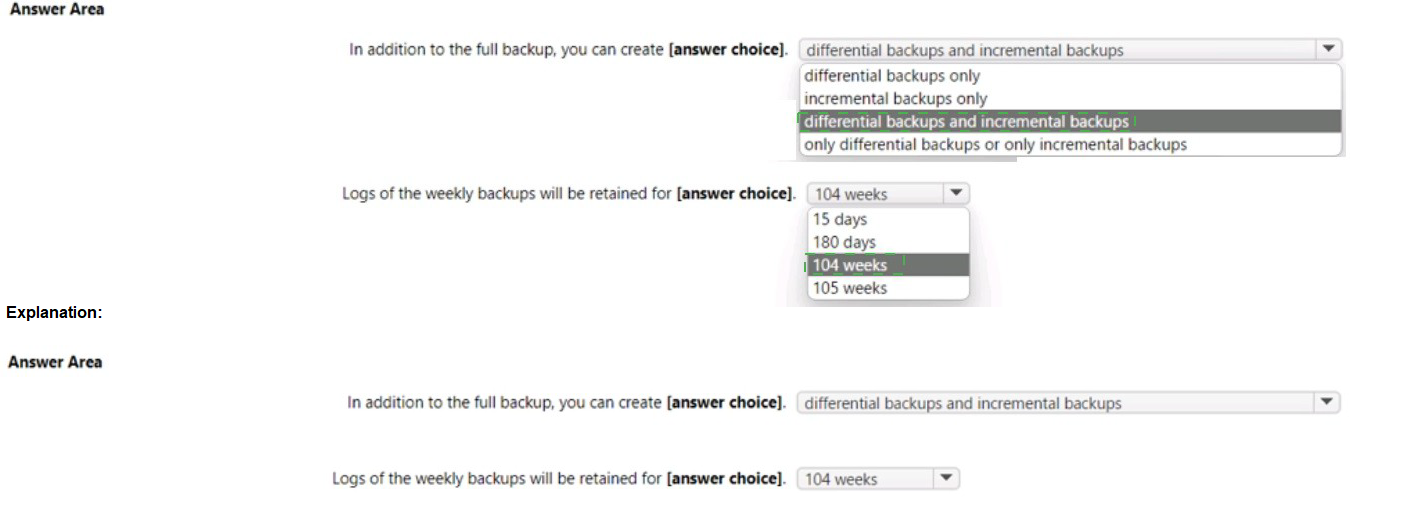
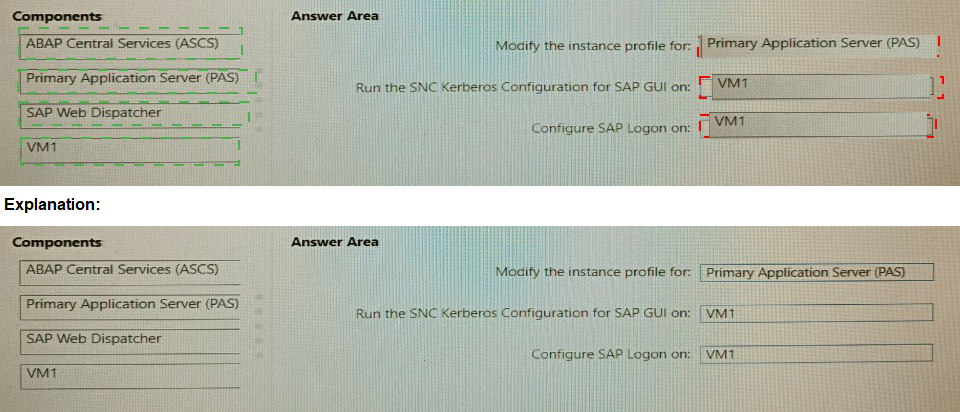
You have an SAP ERP Central Component (SAP ECO deployment on Azure virtual machines. The virtual machines run Windows Server 2022 and are members of an Active Directory domain named contoso.com.
You install SAP GUI on an Azure virtual machine named VM1 that runs Windows 10.
You need to ensure that contoso.com users can sign in to SAP ECC via SAP GUI on VM1 by using their domain credentials.
What should you do? To answer, drag the appropriate components to the correct tasks. Each component may be used once, more than once, or not at all. You may need to drag the split bar between panes or scroll to view content.

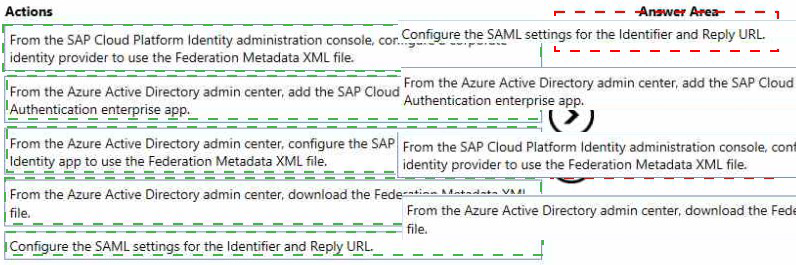
You have an Azure Active Directory (Azure AD) tenant and an SAP Cloud Platform tenant.
You need to ensure that users sign in automatically by using their Azure AD accounts when they connect to SAP Cloud Platform.
Which four actions should you perform in sequence? To answer, move all actions from the list of actions to the answer area and arrange them in the correct order.

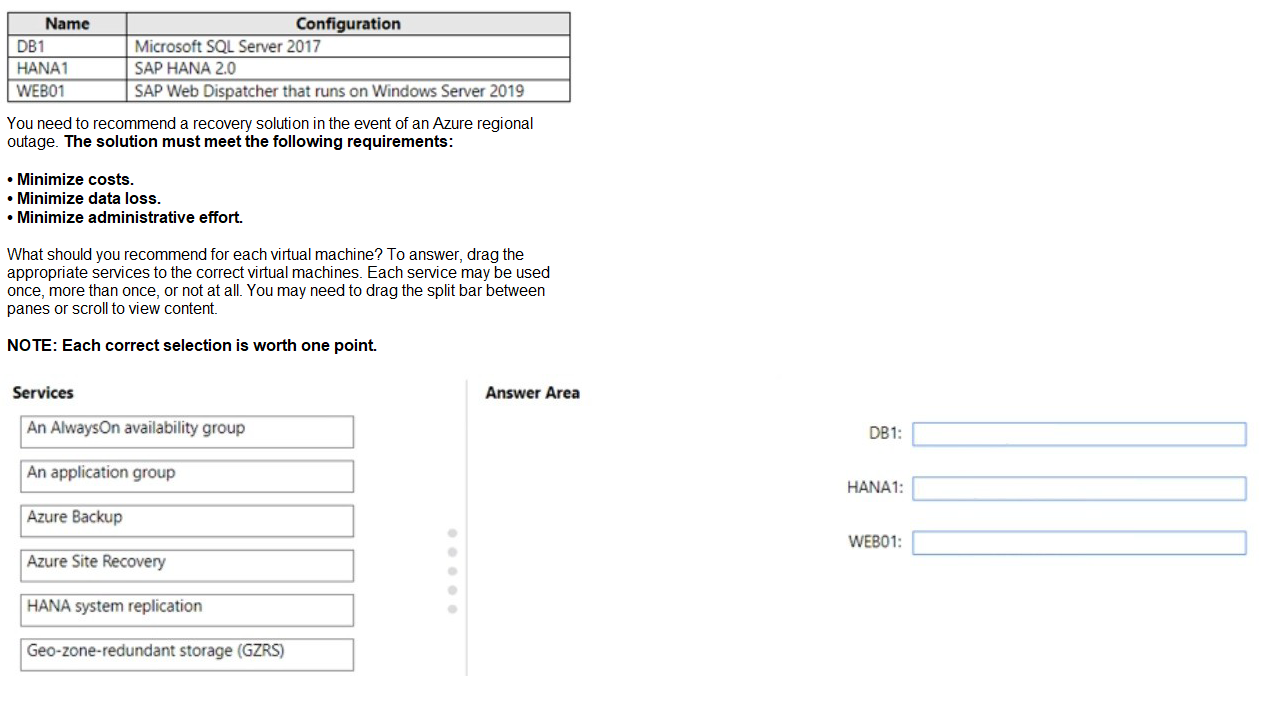
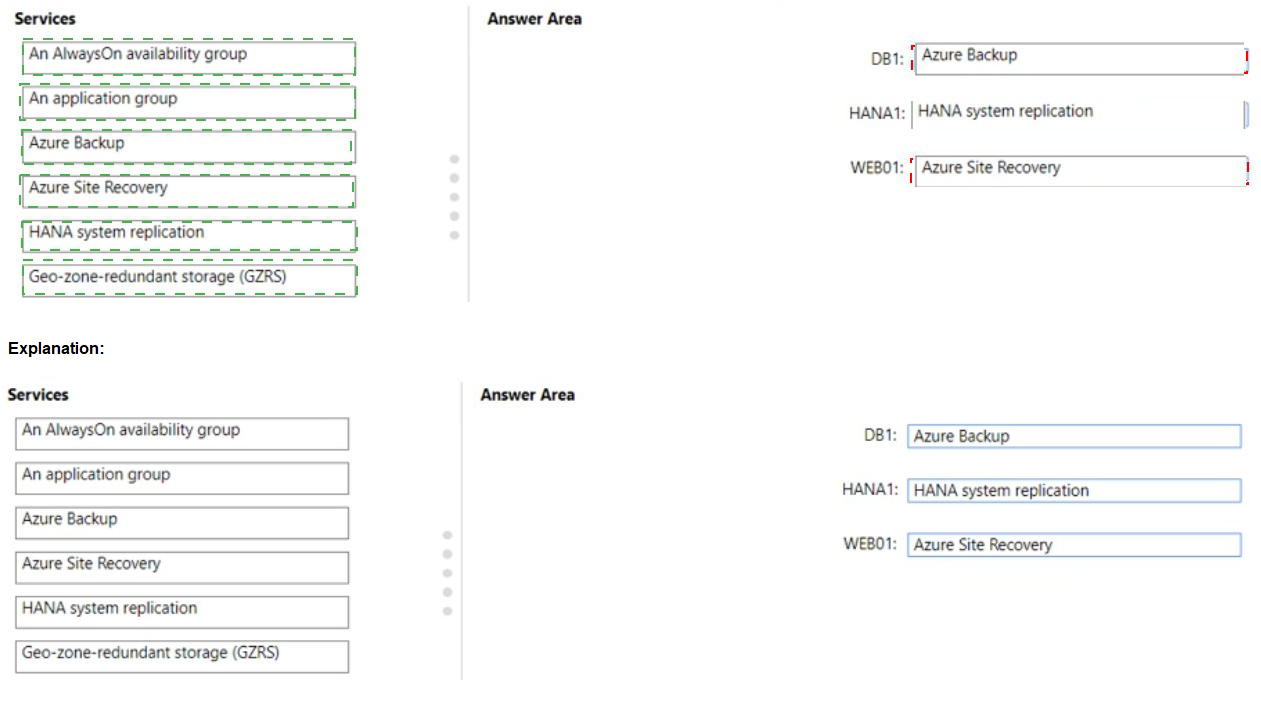
You have an SAP landscape on Azure that contains the virtual machines shown in the following table.
You migrate an SAP environment to Azure.
You need to inspect all the outbound traffic from the SAP application servers to the Internet.
Which two Azure resources should you use? Each correct answer presents part of the solution.
Network Performance Monitor
A.
Azure Firewall
B.
Azure Traffic Manager
C.
Azure Load Balancer NAT rules
D.
Azure user-defined routes
E.
a web application firewall (WAF) for Azure Application Gateway
Azure Traffic Manager
E.
a web application firewall (WAF) for Azure Application Gateway
| Page 4 out of 22 Pages |